

During the 2026 Living Beyond Breast Cancer MBC conference, which was the 20th anniversary of that particular conference this past weekend, I had the distinct honor of serving on a panel during a breakout session organized by Project Life and brilliantly moderated by April Stearns from Wildfire Community. My fellow panelist, Nikoo McGoldrick, a bestselling author who is also living with Stage IV Metastatic Breast Cancer (MBC), and I answered a few questions about how writing has helped us to cope with the diagnosis, but the real highlight of the session for us and the the attendees, were the writing prompts. Each attendee received a journal sponsored by AstraZeneca, participated in writing and sharing, so much so that no one wanted to stop talking or leave the session.
I want to also acknowledge, as I did verbally during the session, that I was not a planned participant, that Project Life’s Director of Healing Circles, Melinda Feola-Mahar, was meant to the on the panel. MBC too often interferes with what we plan, what we desire, what we need and MBC prevented Melinda from traveling and participating. I felt that loss and the panel was not the same for my substitution.
During the writing session and elsewhere during the conference, April presented research on how much expressive writing positively affects us emotionally, physically, and mentally, which was seen and felt palpably in the room. I would highly recommend you listen to the recording of the session once it is available on the LBBC website. The most powerful part of the session was the attendees reading their writing and today, I wanted to share my own responses to the prompt, “What my medical file won’t tell you …. “
What my medical file won’t tell you is how I arrive — already braced — carrying a quiet, practiced fear into every room, even when my pulse and BP behaves, even when all the numbers (so many numbers) nod politely in my favor. I have learned how to look steady. I have learned how to keep the storm mostly beneath the surface. But I am not those readings. I am not the tidy story written in clinical ink.
What my medical file won’t tell you is the discipline of survival — how I tend to this body like a fragile, flickering thing, how pain threads itself through every hour, how illness does not visit but lives with me, a constant, uninvited companion, coiling within me and bursting forth at the least opportune time. When I sit on that papered table often wearing a paper gown, I bring a history that hums beneath my skin — weight that rarely has a name, weight that few think to ask about and even fewer actually understand.
What my medical file won’t tell you is the shape of my grief — how it settles into my bones, how it spills into my home, how it binds me to others walking this same narrow path. There is a language we share, unspoken, unmistakable — a recognition deeper than explanation. Sometimes truth lives there, outside the reach of expertise, and it is not an indictment — just a fact of being human.
What my medical file won’t tell you is the seismic rupture of 2017— the sudden severing of my tandem breastfeeding relationship with my boys, the way my body was asked to let go too quickly, the way those moments still echo nearly a decade later, even if my boys don’t consciously remember. It may be a footnote on a chart, that we had to abruptly wean, but my body remembers it as a sundering. Remembers the absence of gentleness. Remembers being left to carry it alone without meaningful support and how my youngest son’s screams still echo in my bones.
What my medical file won’t tell you is how metal now steadies my bones while everything softer bears the cost—how the places meant to heal never quite returned to themselves, how each step is negotiated, each movement a quiet calculation. To measure my relationship with pain on a scale of one to ten is to press something vast and shifting into a narrow line. It flattens what is layered, quiets what is complex. The numbers click into place, the words are spoken, but neither can hold the weight of it—the ebb and surge, the sharpness and the ache, the way pain lines every facet of my life.
What my medical file won’t tell you is the choreography of motherhood within illness — how I bend time around my children, how I guard the edges of their days, how fiercely I work to keep their world intact. If I watch the clock, if I seem restless or urgent, if I ask too many questions about timing, it is because their lives are the axis around which everything else must turn. And my boys, rapidly growing into young men, who once grew quietly beneath my heart, now walk the world carrying its most sacred fragments—the pulse of me, the echoes, the tender and unspoken pieces—woven into who they are, wherever they go, forever.
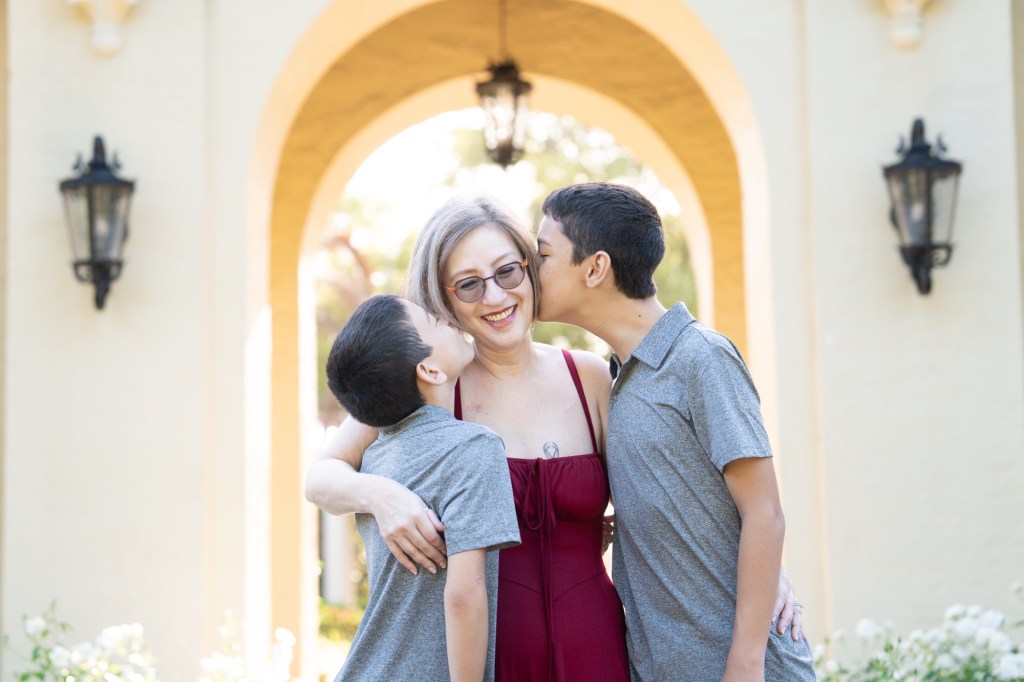
What my medical file won’t tell you is how language can wound — how easy platitudes land like erasure, dismissiveness, how being misunderstood can hollow something sacred, how quickly intuition is dismissed, how often survival is mistaken for difficulty. No one in healthcare witnesses the long shadow cast by a careless word—the way it lingers, echoes, reshapes what follows. The missed adverse events slip quietly through the cracks, unnoticed until they bloom into something heavier. And the cost—so rarely accounted for—accrues in unseen ledgers: in bodies, in trust, in the quiet unraveling that no chart or note can fully hold.
What my medical file won’t tell you is who I am beyond all of this— not the diagnosis, not the data, not the carefully curated narrative.
What my medical file will never tell you is my humanity— vast, unruly, unfinished— the most essential parts of me that refuse to be reduced to lines on a page, especially those written by someone else.
I can’t bring this post to a close without lifting up the quiet, powerful spaces that both Wildfire and Project Life tend so intentionally—places where words are not just written, but witnessed. If you feel even the faintest pull, sign up for their newsletters to know when these offerings open; they arrive like doors, gently, but with purpose.
Expressive writing—here, in these pages, and beyond them—has become more than an outlet for me. It is a reckoning, a release, a return. It is where I lay things down I didn’t know I was carrying, where I meet myself without pretense, where the truest parts of me are allowed to speak in their own language. In writing, I have found movement where I was stuck, tenderness where I was hardened, and a kind of healing that does not rush or demand, only unfolds.
I am different because of it. Softer in some places, stronger in others. And so I offer this, not as instruction, but as invitation: to wonder what might be waiting for you on the page, and who you might meet there if you step out of your comfort zone.
 No Half Measures
I love reading what you’ve written. It’s a mirror of what so many of us are experiencing. ❤️
LikeLiked by 1 person
Thank you for reading and commenting — I’m reminded so often how much more these experiences bind us than divide us.
LikeLike
I wish I had adequate words to convey to you Abby, but I don’t, never have and never will. You are an amazing individual. I am beyond sorry that you have had to endure this most incredible pain; and as a mother and a wife. You are an inspiration that I hope becomes better known. What an unbelievable writer you are. That piece of writing should be distributed in so many places I can think of. Thank you.
LikeLike